Are the Waste Management Goals Achievable?
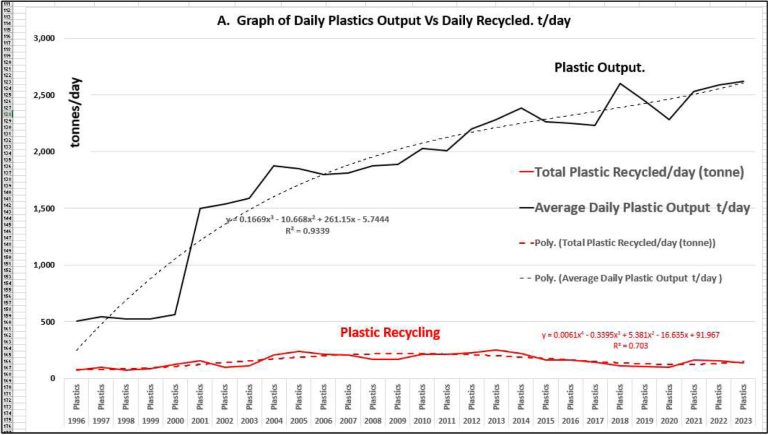
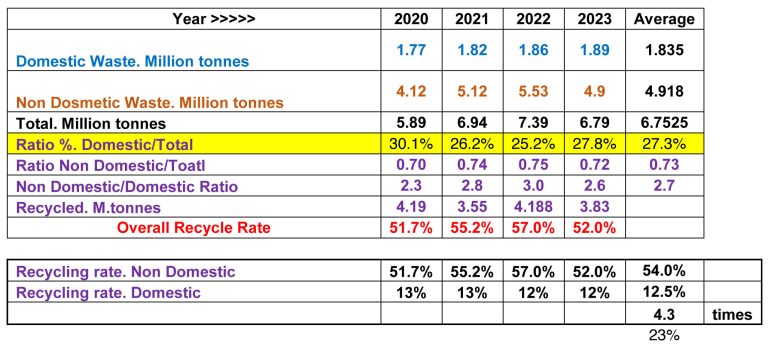
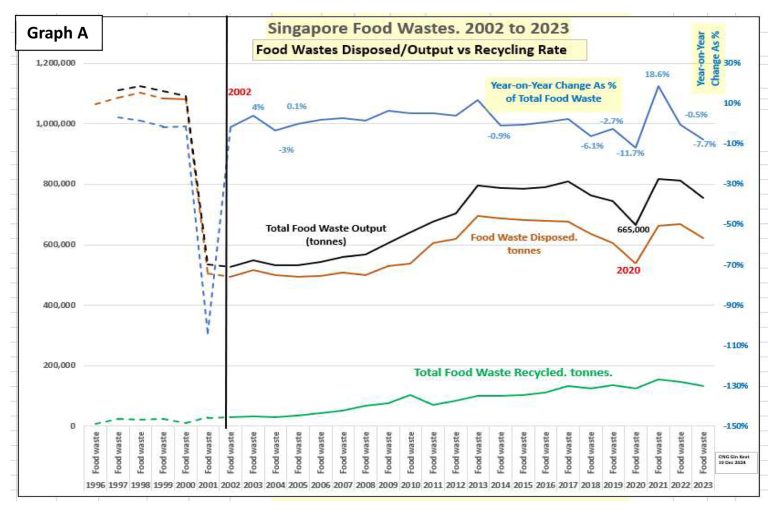
In a recent post, the recent Singapore recycling rates have under-performed but time marches on.
Are the 2030 Waste Management Goals Achievable?
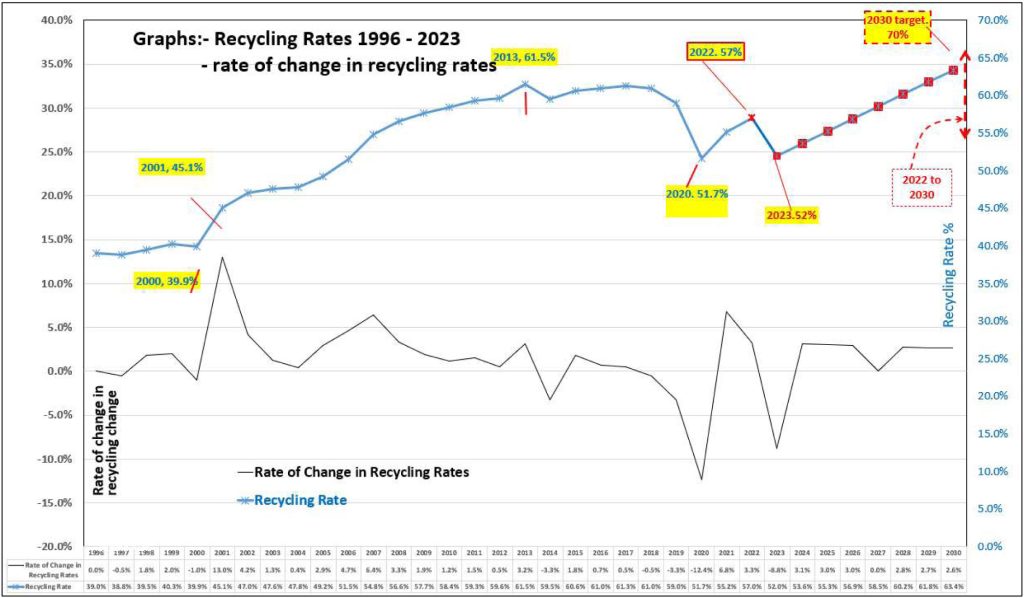
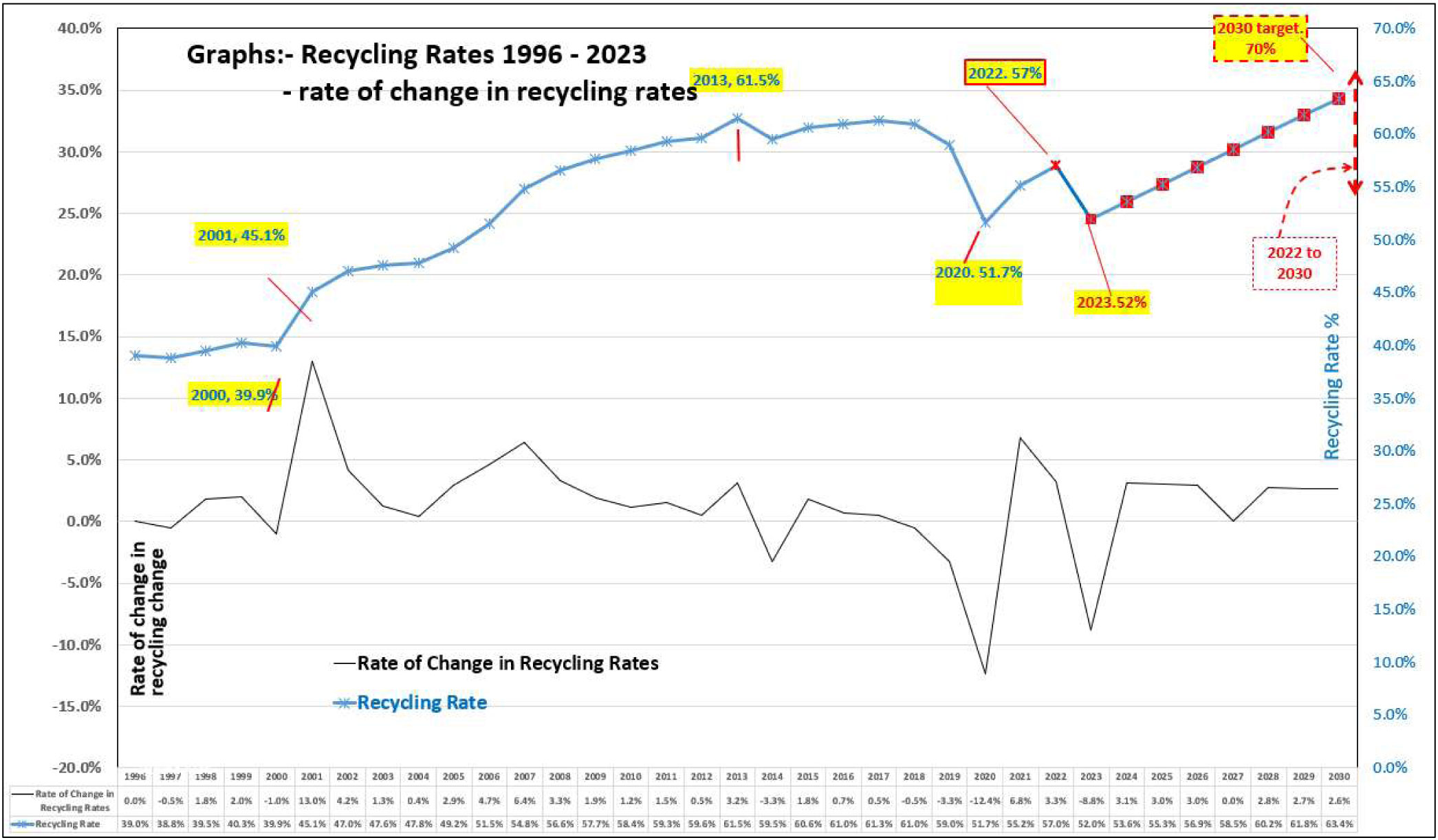
The highlighted graph (outlined in a red ellipse) for the remaining years to 2030 shows that much more effort is needed; otherwise, it’s a case of too little, too late.
Given that very large organizations and government bodies have built-in inertia to gather feedback, formulate responses, implement, and review performances, meeting the target would be incredibly optimistic. The rate of continuous improvement in recycling has never been achieved before.
There have been requests for proposals, which take time to review and implement. However, it is also critical to understand the different market forces—social, financial, and environmental—pulling in different directions.
Data and information play key roles but have often not been recognized.
- Our waste statistics release dates are increasingly delayed in recent years.
- We need to have such data more than once a year, starting with updates every six months. The cost of obtaining this data twice a year is far outweighed by the benefits and usefulness of the information in reviewing performance and policies. (I was given the runaround when I asked NEA years ago to obtain/release more frequent waste statistics.)
- We also need more stakeholders to be involved, rather than depending solely on public waste collectors and agencies.
- Shoutouts to the many social enterprises and NGOs that have answered such calls to action. Let’s get corporations to support these ground-up initiatives.